
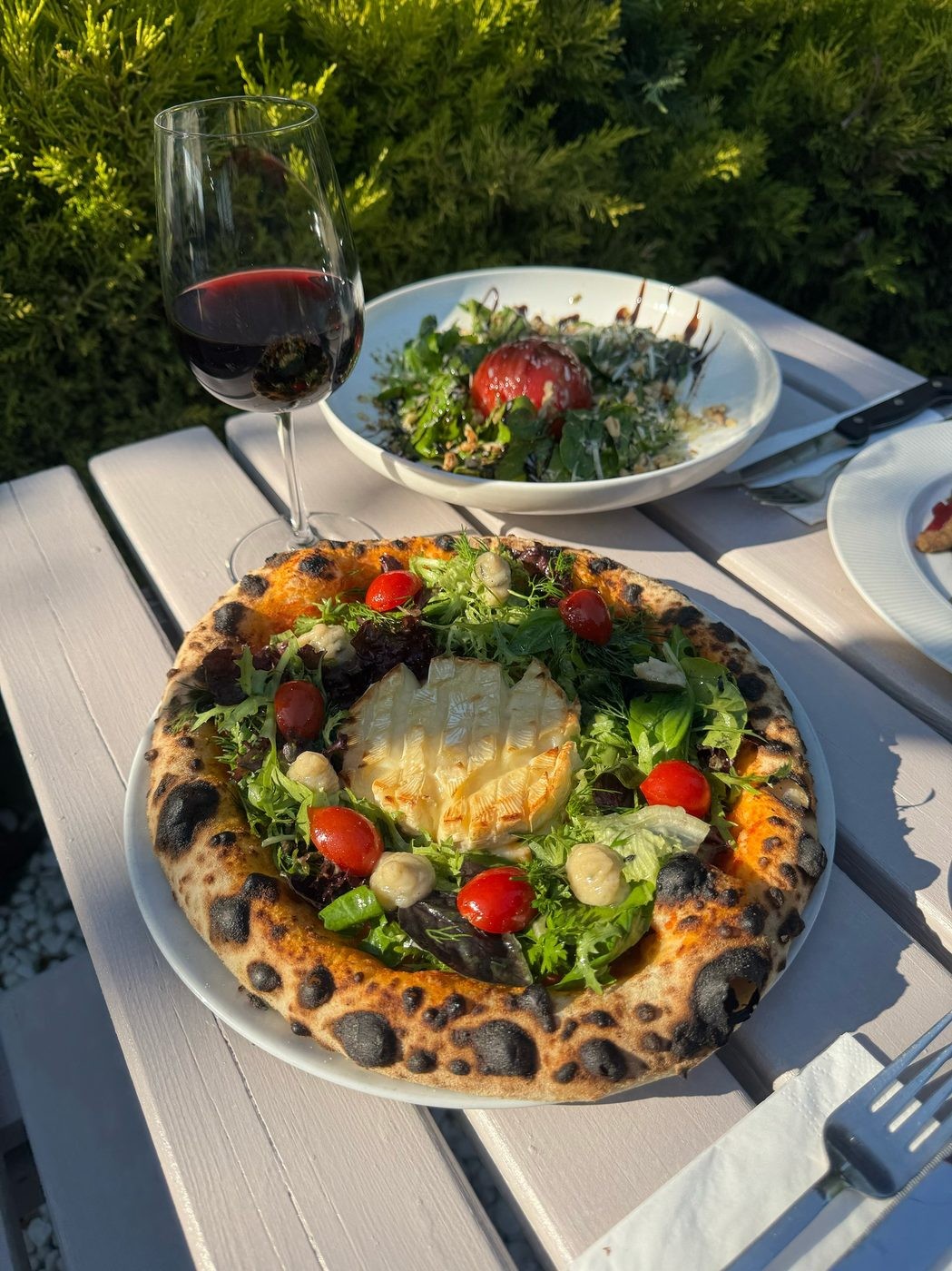
Every great Neapolitan pizza begins with dough that has been made properly — and "properly" is a precise word. It means the right flour, the right water temperature, the right hydration, and above all, the patience to let fermentation do its work. At Hitaly Garden, our dough rests for a minimum of 72 hours before it ever sees the oven.
Temperature: The Invisible Chef
Of all the variables in pizza dough, temperature is the most underestimated. The target dough temperature after kneading is 16–18°C. Why? Because yeast activity — and therefore fermentation speed — is directly controlled by temperature. A dough that finishes kneading at 24°C will ferment far too quickly, producing large, uneven bubbles and a harsh flavor. At 16°C, fermentation proceeds slowly and steadily, building complexity and a clean, slightly tangy character.
Achieving this target requires knowing your kitchen temperature, your flour temperature, and your water temperature — and adjusting accordingly.
Ice Kneading Technique
In professional Neapolitan kitchens, ice-cold water (or partially ice water) is used during kneading to counteract the heat generated by friction. A spiral dough mixer running at full speed can raise dough temperature by 8–10°C. Using ice water offsets this rise, bringing the finished dough to the target range. This technique is one of the most direct ways to control final dough temperature in a warm kitchen.
Flour: Tipo 00, Tipo 0, or Bread Flour?
This is the most debated question in pizza circles. The short answer: Tipo 00 for Neapolitan pizza.
Tipo 00 refers to the milling fineness of Italian wheat flour — the finest grade. Its protein content (typically 11–12.5%) creates an elastic, extensible gluten structure ideal for thin, hand-stretched Neapolitan bases. It absorbs water evenly, stretches without tearing, and blisters beautifully in a 450–500°C wood-fired oven.
Tipo 0 is slightly coarser — fine for many applications but less suited to the thin, leopard-spotted cornicione of a true Neapolitan pizza. Bread flour (Manitoba) has higher protein (13%+) and is excellent for longer fermentation times and sourdough-style doughs, but produces a chewier, denser crumb than the classic Neapolitan style.
Hydration: How Much Water Should the Dough Absorb?
Hydration is expressed as a percentage of flour weight. A 60% hydration dough means 600g of water per 1000g of flour. For classic Neapolitan pizza, 60–65% hydration is the traditional range — wet enough for an open, airy crumb, dry enough to handle comfortably.
Higher hydration (70%+) produces an even more open crumb and better moisture retention in the oven, but demands more skill in shaping. Lower hydration (below 58%) makes the dough easier to work with but produces a denser, less interesting texture.
The Fermentation Process: Patience Is the Real Recipe
Fermentation transforms dough from a simple mixture of flour, water, yeast and salt into something complex and deeply flavorful. The longer and colder the fermentation, the more organic acids develop — contributing to flavor depth, better digestibility, and a more resilient structure.
At Hitaly Garden, we use a two-stage cold fermentation: bulk fermentation (the entire dough mass rests in a cold room) followed by ball fermentation (individual dough balls rest in covered trays). Total time: 48–72 hours at 4°C. The result is a dough that smells faintly of yogurt, stretches like silk, and holds its air when shaped.
Approaching the Oven: If the Dough Is Ready, So Must Be the Oven
All of this careful preparation means nothing if the oven isn't at the right temperature. A wood-fired stone oven must reach 450–500°C at the stone surface before the first pizza goes in. At this temperature, a Neapolitan pizza cooks in 60–90 seconds — the rapid heat caramelizes the crust, chars the cornicione in the leopard-spotted pattern that marks an authentic Neapolitan pizza, and keeps the center moist.
A home oven simply cannot replicate this. The maximum temperature of a conventional oven (typically 250°C) results in a longer bake time, which dries out the interior before the crust colors properly. This is why wood-fired pizza — like the pizzas at Hitaly Garden — tastes fundamentally different from oven-baked pizza at home.