
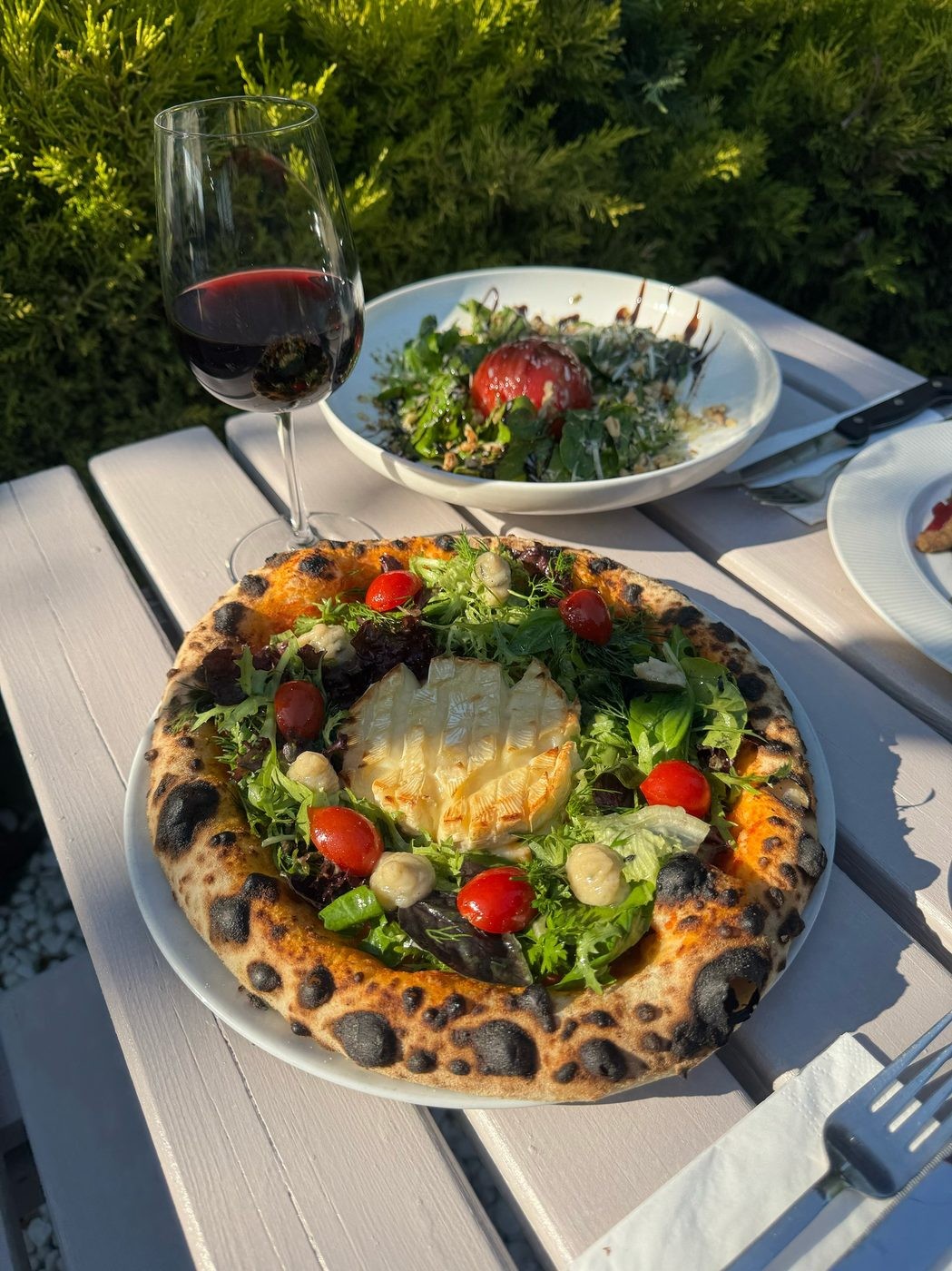
The difference between a good pizza and a great pizza often comes down to what happens before the dough is even mixed. Pre-ferments — whether a French-style poolish, an Italian biga, or a natural sourdough starter — add layers of flavor that no amount of toppings can substitute. They are the invisible architecture of memorable pizza.
What Is a Pre-Ferment and Why Does It Matter?
A pre-ferment is a portion of flour and water (and sometimes yeast) that is mixed and allowed to ferment before being incorporated into the final dough. During fermentation, yeast and bacteria produce carbon dioxide (for leavening), organic acids (for flavor), and enzymes that break down complex starches and proteins.
The result: a dough with better extensibility, a more open crumb, deeper flavor, and improved shelf life. The crust becomes more digestible — the long fermentation reduces gluten and phytates that many people find difficult to process in quickly-made dough.
Poolish: Liquid, Soft, and Aromatic
Poolish is a French technique adopted enthusiastically by Italian pizzaioli. It is a 100% hydration pre-ferment — equal weights of flour and water, with a tiny amount of commercial yeast (0.1–0.5% of flour weight). The mixture is liquid, almost batter-like, and is left to ferment at room temperature for 12–16 hours, then refrigerated for another 4–8 hours.
The result is a bubbly, slightly tangy mass with an unmistakable yogurt-like aroma. When incorporated into the final dough (typically at 30–50% of total flour), poolish contributes:
- A light, open crumb with irregular alveoli
- A mild, clean sourness without the assertiveness of sourdough
- Better moisture retention in the oven — the crust stays softer longer
- A characteristic blister pattern on the finished pizza
Biga: Firm, Structural, the Classic Italian
Biga is the Italian counterpart to poolish, but firm rather than liquid. Hydration is typically 44–50% (less than half the weight of flour in water), creating a stiff, crumbly mass that doesn't look much like dough. Commercial yeast is used in small quantities (0.5–1%), and fermentation takes place over 16–24 hours at cool temperatures (16–18°C).
The firmness of biga slows fermentation, allowing a longer, more complex development of flavor compounds. Breads and pizzas made with biga tend to have:
- A chewier, more structured crumb
- A slightly nutty, wheat-forward flavor
- Exceptional crust color from natural sugars released during fermentation
- Excellent tolerance during final fermentation — the dough behaves reliably
Sourdough: Pizza's Ancient Recipe
Sourdough uses no commercial yeast. A sourdough starter (called "lievito madre" in Italian — "mother yeast") is a living culture of wild yeasts and lactic acid bacteria, captured from the flour and surrounding environment and sustained by regular feeding of flour and water.
A well-maintained lievito madre can be decades old — professional bakers guard their starters the way family recipes are guarded. The bacteria in the starter produce both lactic acid (yogurt-like, mild) and acetic acid (vinegar-like, sharp), with the balance determined by hydration, temperature, and feeding schedule.
Sourdough pizza is the most complex and most demanding of the three approaches: slower, less predictable, and highly sensitive to temperature changes. But in skilled hands, it produces pizza with extraordinary depth of flavor, a unique chewiness, and a crust that stays interesting hours after baking.
Heirloom Grains: Flavor from the Past
A growing trend in serious pizza kitchens is the use of ancient or heirloom wheat varieties — Senatore Cappelli, Timilia, Khorasan (Kamut), Emmer, and Einkorn. These varieties were largely abandoned in the 20th century as modern high-yield wheat was developed, but they offer qualities that standard Tipo 00 cannot: deeper mineral flavor, higher nutrient content, and natural resistance to the over-processing that makes modern flour nutritionally impoverished.
Using heirloom grains also enables the creation of natural sourdough starters from the grain itself — indigenous wild yeasts that exist on the grain's surface produce starters with a unique regional character, a true expression of terroir in bread form.
Which Technique to Use and When?
There is no single correct answer — the technique should serve the pizza style and the available time.
For a light, airy Neapolitan pizza with a delicate, open crumb: poolish at 30–40% of flour weight, 12–16h room fermentation, 72h total cold fermentation. For a more structured Roman-style pizza in teglia (baking tray): biga at 50%, longer fermentation, higher hydration final dough. For the most complex, most artisanal result: sourdough, with a lievito madre maintained at 50% hydration, refreshed 8 hours before mixing.
At Hitaly Garden, we use a combination of these principles — adapting to seasonal conditions, ambient temperature, and the specific flour we're working with at any given time. The goal is always the same: a crust that has character, a crumb that has life, and a flavor that stays interesting from the first bite to the last.